
The World Is at War With Itself Because Humanity Has Forgotten How to Be at Peace
Why Is the World in Conflict (Again) ? The Human Patterns Behind Global Unrest | Life in Synergy®
Why does humanity keep repeating cycles of fear, conflict, and division? Discover how self-awareness and inner peace can help change the pattern with Best of Boston winner/ consciousness teacher Helena Collins.

By Helena Collins and Brian Collins | Life in Synergy® | October 22, 2026
If this question has ever lived in your body, this article found you for a reason.
There is something profoundly disturbing about waking up in the morning, reaching for your phone, and discovering that humanity has once again found another reason to threaten, punish, destroy, or dominate itself.
Another missile. Another economic crisis. Another government pointing fingers. Another nation preparing for confrontation. Another group of people convinced that their suffering justifies creating suffering for someone else.
And somewhere, in the middle of all this madness, an ordinary human being is sitting at a kitchen table, wondering how to pay the bills, how to keep their family safe, and why the world seems to be growing increasingly incapable of finding peace.
We have become extraordinarily sophisticated at creating conflict and remarkably inexperienced at understanding what creates it within ourselves.
And perhaps that is the greatest crisis facing humanity today.
The Headlines Are Changing. The Human Patterns Are Not.
On October 22, 2026, the news reminds us that the world continues to struggle with the consequences of unresolved hostility, competing interests, economic instability, and the pursuit of power.
But here is a question worth asking.
What if the greatest problem facing humanity isn't simply the people making decisions in positions of power?
What if those decisions are also manifestations of human patterns that have existed for thousands of years?
Fear. Greed. Control. Resentment. Revenge. Insecurity. The desperate need to be right. The inability to admit wrongdoing. The belief that someone else must lose in order for us to win.
Sound familiar?
It should.
Because these patterns do not begin in government buildings, corporate boardrooms, or military command centers.
They begin wherever human beings surrender awareness to their unresolved emotional reactions.
They can appear in our marriages, friendships, workplaces, families, and even in the conversations we have with ourselves.
The scale may be different. The consequences are certainly different. But some of the underlying emotional behaviors are painfully recognizable.
A person who cannot tolerate disagreement may attempt to control their partner. A person consumed by insecurity may undermine a colleague. Someone unwilling to acknowledge their own mistakes may spend years blaming everyone around them.
And when similar patterns become embedded in powerful institutions, their consequences can extend across entire populations.
This does not mean personal arguments are equivalent to war, nor does it excuse those responsible for violence.
It means that understanding human behavior matters at every level of society.
We Have Learned to Manage the World Without Learning to Manage Ourselves
Consider how much humanity has accomplished.
We can communicate across continents in seconds. We can explore distant planets, develop astonishing medical technologies, and create artificial intelligence capable of processing enormous amounts of information.
Yet we still struggle to sit across from another human being and acknowledge that their experience might be different from ours.
We have advanced our technology without ensuring that our emotional development keeps pace.
We know how to build systems of extraordinary complexity, but many of us have never learned how to recognize the moment fear becomes anger, anger becomes resentment, and resentment becomes destructive behavior.
And we wonder why history keeps repeating itself.
At Life in Synergy®, we have spent years exploring the recurring patterns that shape human experience.
One of the most important realizations is that what remains unrecognized within us often continues to influence the choices we make.
We can change jobs, relationships, homes, governments, and circumstances, yet find ourselves confronting the same emotional struggles in entirely different surroundings.
The scenery changes.
The characters change.
The story somehow remains familiar.
Until we begin to understand our participation in that story.
The Global Economy and the Emotional Cost of Fear
When conflict disrupts international trade, threatens energy supplies, or destabilizes financial markets, the effects can travel far beyond the countries directly involved.
A family thousands of miles away may experience rising costs, uncertainty about employment, or anxiety about the future.
But there is another cost that rarely appears on an economic report.
The emotional cost of living in a perpetual state of anticipation.
Waiting for the next crisis. Waiting for another price increase. Waiting for another frightening headline.
When we continually expose ourselves to threatening information, our bodies can respond with heightened stress, tension, and vigilance.
And when we remain in that condition, our capacity for thoughtful responses can become compromised.
We may become less patient with the people we love. Less willing to listen. More reactive to inconvenience. More inclined to assume the worst.
Before long, the conflict occurring thousands of miles away has found its way into our own living room.
Not because we created the international crisis, but because we have allowed its emotional consequences to influence how we participate in our immediate lives.
That distinction matters.
We cannot individually control every global event.
But we can begin to understand how those events affect us and how we respond to the people around us.
Peace Is Not the Absence of Conflict. It Is the Presence of Consciousness.
There is a misconception that inner peace requires withdrawing from the world, avoiding difficult conversations, or pretending everything is wonderful.
We disagree.
Peace does not require ignorance.
It requires awareness.
It means recognizing that anger is rising without automatically allowing anger to make your decisions.
It means understanding that fear is present without surrendering your entire future to it.
It means acknowledging injustice without permitting hatred to become your identity.
And it means accepting that you can care deeply about what happens in the world without allowing every event to dismantle your internal stability.
This is not passive spirituality.
This is responsibility.
The responsibility to understand the energy, intention, and emotional condition we bring into our interactions.
Because every interaction is an opportunity to either repeat an old pattern or create a different experience.
You Cannot Give 100% of Someone Else's 50%
One of the foundational principles we teach through Life in Synergy® is the importance of giving 100% of your own 50%.
This principle applies beautifully to relationships, but its implications extend far beyond marriage.
You cannot force another person to become conscious.
You cannot make another nation choose peace.
You cannot compel a political leader to act with integrity.
And you cannot spend your entire life attempting to control what exists outside your responsibility without eventually exhausting yourself.
But you can take full responsibility for your own participation.
Your words. Your choices. Your integrity. Your reactions. Your willingness to examine the emotional patterns that influence your behavior.
That does not guarantee that others will respond in kind.
Nor does it eliminate the need for boundaries, accountability, or collective action.
It simply prevents you from abandoning your own responsibility while demanding that everyone else fulfill theirs.
Imagine how different our relationships might become if we approached disagreement with the intention of understanding rather than defeating.
Imagine what might happen if we stopped treating every opposing viewpoint as a personal threat.
Imagine the possibilities if accountability became more important than protecting our egos.
These are not insignificant changes.
They are the foundations upon which healthier human relationships can be built.
Humanity Cannot Heal Through Blame Alone
There is an almost intoxicating satisfaction in identifying someone else as the problem.
It gives us a target. A villain. An explanation for everything that feels wrong.
And sometimes accountability is absolutely necessary. People and institutions must answer for harmful actions.
But accountability and self-awareness are not enemies.
We can demand responsible leadership while examining our own behavior.
We can oppose violence while refusing to cultivate hatred.
We can recognize injustice without allowing bitterness to consume our lives.
What we cannot do is continue believing that the entirety of humanity's problems exists somewhere outside humanity itself.
We are all participants in human consciousness, culture, and behavior.
Not equally responsible for every tragedy. Not equally powerful. Not equally accountable.
But each of us has opportunities to influence the quality of the human experience within our own sphere.
And that influence begins with awareness.
The Life in Synergy® Approach: Changing the Pattern Within
Through our Apex Life in Synergy® program, we help individuals explore the recurring emotional and behavioral patterns that influence their relationships, decisions, personal development, and overall experience of life.
The objective is not to tell people what to believe.
It is to help them understand why they believe, react, and behave as they do—and whether those patterns continue to serve the life they wish to create.
Through Nutritional Alignment®, we emphasize the importance of supporting the physical body as part of a balanced approach to well-being.
And through the Synergistics Fitness Method®, created by Helena Collins in 1996, we encourage conscious physical engagement and a more attentive relationship with the body.
These approaches address different aspects of personal well-being, but share an underlying philosophy.
We cannot separate the quality of our lives from the quality of our participation in them.
We can become more aware.
We can make different choices.
We can stop repeating behaviors simply because they are familiar.
And we can begin developing an inner stability that does not depend entirely on the circumstances surrounding us.
The World Does Not Need More People Who Are Certain They Are Right
It needs more people willing to understand why they react the way they do.
It needs people who can recognize their own contradictions.
People who can admit mistakes without interpreting accountability as humiliation.
People who understand that strength does not require domination and compassion does not require surrender.
People who recognize that peace is not weakness.
And people who are willing to confront their own unresolved patterns before projecting them onto everyone around them.
Humanity has spent centuries attempting to rearrange the external world.
We have changed borders, governments, economic systems, technologies, and social structures.
Some changes have brought meaningful progress. Others have created extraordinary suffering.
Yet the recurring human struggles with fear, control, insecurity, and the misuse of power remain.
Perhaps the next great evolution of humanity will not be measured solely by what we invent.
Perhaps it will also be measured by what we finally learn to understand about ourselves.
If This Article Found You...
Perhaps you are exhausted by the headlines.
Perhaps you feel the emotional weight of a world that seems unable to stop fighting with itself.
Or perhaps something in these words has reminded you of a conflict in your own life that continues to repeat itself.
Before you attempt to solve the world's problems today, consider one question.
Where in my own life am I continuing a conflict that I have the power to approach differently?
Not because every conflict is yours to resolve.
Not because you should tolerate mistreatment.
But because your awareness creates the possibility of choice.
And choice creates the possibility of change.
The world may not become peaceful tomorrow.
But you do not have to wait for the entire world to change before beginning to experience a different relationship with yourself and others.
At Life in Synergy®, we believe that returning to a state of greater inner alignment is not an escape from humanity.
It is one way of participating in humanity more consciously.
Return to One.
Because the peace we seek in the world must also become something we are willing to practice within ourselves.
With love and consciousness,
Helena Collins & Brian Collins Founders, Life in Synergy® www.lifeinsynergy.com

The Price at the Pump Is Rising. So Is the Pressure Inside Us.
You pull into the gas station.
You get out of the car, insert the card, grab the nozzle and watch the numbers begin climbing.
$20.
$40.
$60.
$80.
And somewhere between the first gallon and the last, something else starts rising too.
Your frustration.
Your fear.
Maybe your anger.

By Helena Collins & Brian Collins, Founders of Life in Synergy®
If this question has ever lived in your body, this article found you for a reason.
You pull into the gas station.
You get out of the car, insert the card, grab the nozzle and watch the numbers begin climbing.
$20.
$40.
$60.
$80.
And somewhere between the first gallon and the last, something else starts rising too.
Your frustration.
Your fear.
Maybe your anger.
Gasoline has become more than fuel. For millions of people, the number glowing above that pump has become another reminder that life feels increasingly expensive, increasingly uncertain and increasingly outside their control.
And right now, that feeling isn't imaginary.
On September 30, 2026, AAA's national average for regular gasoline stood at approximately $4.43 per gallon, compared with roughly $3.15 one year earlier. The U.S. Energy Information Administration's latest weekly figure similarly put regular gasoline at $4.465 per gallon.
But at Life in Synergy®, we want to ask a different question.
What happens inside human beings when the world outside them becomes increasingly unstable?
Because perhaps the most important thing happening at the gas pump isn't occurring inside your gas tank at all.
It is happening inside you.
External Pressure Reveals Internal Pressure
Let's be very clear about something.
Human emotions do not magically determine the price of gasoline.
Gas prices are influenced by very real economic and geopolitical forces: crude-oil prices, production, supply, demand, refining, distribution and international events. Recent elevated prices have been associated in part with expensive crude oil and continuing volatility surrounding the Strait of Hormuz.
But those forces exist within a human civilization.
And civilization is ultimately the accumulated behavior of human beings.
Fear.
Competition.
Territorialism.
Scarcity.
Power.
Consumption.
Control.
Conflict.
These aren't merely geopolitical concepts. They are human patterns.
The same unresolved patterns that can destroy a marriage, fracture a family or poison a workplace can appear on a vastly larger stage between communities, institutions and nations.
The scale changes.
The underlying human tendencies often don't.
That is where the conversation becomes fascinating.
Humanity Keeps Trying to Fix the Outside
We have become extraordinarily sophisticated at rearranging the external world.
We move resources.
We build pipelines.
We negotiate agreements.
We impose sanctions.
We create markets.
We develop technologies.
We elect governments.
We fight wars.
We negotiate peace.
Then another crisis appears and we rearrange everything again.
Yet comparatively little attention is given to the consciousness of the human beings making all these decisions.
We keep trying to engineer a peaceful world while frequently carrying conflict within ourselves.
We demand cooperation from nations while struggling to cooperate with our spouse.
We condemn greed in institutions while privately believing there will never be enough for us.
We demand honesty from leaders while avoiding uncomfortable truths within ourselves.
We complain about humanity's divisions while carrying unresolved resentment toward the person sitting across from us at dinner.
That contradiction matters.
Because the world doesn't exist separately from the people creating it.
We are the world.
The Gas Pump Becomes a Trigger
Now watch what happens psychologically when gasoline climbs.
The pump doesn't simply say:
$4.43 per gallon.
Your subconscious may hear something entirely different.
Things are getting worse.
I'm losing control.
What happens next?
How much will groceries cost?
Can we afford this?
Who's responsible for this?
And suddenly a financial event becomes an emotional event.
Fear searches for certainty.
Anger searches for someone to blame.
Anxiety searches for the next threat.
And before long, people aren't responding only to the price of gasoline anymore.
They're responding to every unresolved fear that price awakened.
This is how external instability can amplify internal instability.
Your 100% of Your 50%
One of the principles we teach through the Apex Life in Synergy® Program is deceptively simple:
You are responsible for 100% of your 50%.
You cannot personally control global oil markets.
You cannot single-handedly end international conflict.
You cannot determine what a barrel of crude oil costs tomorrow morning.
That isn't your 50%.
But you absolutely have responsibility for what happens inside you when circumstances outside you change.
That is your 50%.
Do you immediately enter fear?
Do you become angry?
Do you begin catastrophizing?
Do you carry that frustration home?
Do you snap at your partner?
Do you transfer financial anxiety onto your children?
Do you spend the evening doomscrolling through increasingly frightening predictions?
Or can you recognize the trigger before becoming the reaction?
That moment of awareness is where personal transformation begins.
The Real Energy Crisis
Perhaps humanity is experiencing more than one energy crisis.
There is the energy we extract from beneath the earth.
And there is the energy we continuously generate inside ourselves.
Fear is energy.
Anger is energy.
Resentment is energy.
Compassion is energy.
Gratitude is energy.
Love is energy.
Awareness is energy.
Every human interaction transfers something.
Imagine billions of people walking around carrying unresolved fear, resentment, trauma and scarcity consciousness—and then bringing those energies into marriages, workplaces, boardrooms, governments and international negotiations.
Why would we expect the collective world to remain peaceful when the individuals creating that world are often anything but peaceful inside themselves?
This doesn't mean meditation will suddenly lower gasoline prices.
It means something much more challenging:
A more peaceful civilization ultimately requires more peaceful human beings.
What If the Pump Became a Teacher?
The next time you watch those numbers spinning upward, observe yourself.
Not the price.
You.
Notice what arises.
Fear?
Anger?
Scarcity?
Helplessness?
Blame?
Then ask:
Where have I felt this before?
Because chances are, the gas pump didn't create that emotion.
It revealed it.
This is precisely the territory we explore through Life in Synergy®, the Apex Life in Synergy® Program, EFV Keys, Nutritional Alignment® and the Synergistics Fitness Method®.
Different doors.
Same human being walking through them.
We teach people to recognize recurring patterns rather than spending an entire lifetime unconsciously reenacting them.
Because when you understand the pattern, something remarkable happens.
You gain choice.
And choice changes energy.
Humanity's Outer World Is Telling Us Something
Perhaps our greatest mistake is believing every crisis exists exclusively outside ourselves.
The expensive gas.
The political division.
The wars.
The environmental strain.
The loneliness.
The anger.
The endless feeling that humanity is standing on some enormous psychological fault line.
We keep asking:
What's wrong with the world?
Maybe another question belongs beside it:
What remains unresolved within the people creating the world?
That doesn't eliminate the need for economics, diplomacy, policy, technology or practical solutions.
Quite the opposite.
It asks something more of the people responsible for creating those solutions.
Awareness.
Responsibility.
Emotional maturity.
And the ability to recognize when fear is driving the vehicle.
Because humanity has spent centuries attempting to rearrange the world around the unresolved human being.
Perhaps it's time we worked on the human being too.
The next revolution may not begin in an oil field.
It may begin quietly, inside millions of people who finally realize that peace is not something humanity can continually demand from the world while refusing to cultivate it within ourselves.
And maybe the next time you're standing at the pump watching those numbers climb, instead of allowing fear to take the wheel, you can remember:
The price of gasoline may be outside your control.
The energy you carry away from that pump is not.
If This Article Found You...
If something in these words made you uncomfortable, curious or strangely seen, don't rush past it.
Follow it.
The recurring reactions in our lives are rarely random. They can be invitations to understand something deeper about ourselves.
At Life in Synergy®, we help people recognize the patterns operating beneath their reactions and learn how to take responsibility for 100% of their 50%—not because we can control everything happening around us, but because transformation begins with what we actually can change.
Return to One.
Life in Synergy®, founded by Helena Collins and Brian Collins, is dedicated to helping individuals understand recurring life patterns, cultivate inner peace, and develop higher levels of consciousness through multi-award-winning online educational programs. The Apex Life in Synergy® Program, Synergistics Fitness Method®, EFV Keys, and Helena Collins' bestselling Nutritional Alignment® integrate spiritual wellness, behavioral insight, subconscious awareness, and practical personal transformation into one comprehensive educational system.

The World Is Fighting for Your Reaction. You Don't Have to Give It One.
Something happens somewhere in the world.
Within seconds, your phone knows.
Within minutes, millions of people are reacting.
Within hours, sides have formed.
Anger rises. Fear spreads. Opinions harden. People who knew absolutely nothing about the situation that morning are suddenly certain what everyone else should think about it by lunchtime.
And tomorrow?
Something else will take its place……

By Helena Collins and Brian Collins | Life in Synergy®
If this question has ever lived in your body, this article found you for a reason.
Something happens somewhere in the world.
Within seconds, your phone knows.
Within minutes, millions of people are reacting.
Within hours, sides have formed.
Anger rises. Fear spreads. Opinions harden. People who knew absolutely nothing about the situation that morning are suddenly certain what everyone else should think about it by lunchtime.
And tomorrow?
Something else will take its place.
Welcome to modern consciousness.
Never in human history have so many events, emotions, tragedies, opinions, advertisements, arguments, predictions and demands for our attention been able to enter our minds so quickly.
The world no longer knocks on the door.
It lives in our pocket.
And increasingly, it wants something from us.
A reaction.
Not necessarily understanding.
Not contemplation.
Not wisdom.
Reaction.
Click.
Respond.
Share.
Judge.
Fear.
Buy.
Condemn.
Defend.
Choose a side.
Do it quickly.
Because there is another piece of information coming right behind it.
And perhaps one of the most radical things a human being can do today is something remarkably simple.
Not react immediately.
There is a difference between being informed and being internally invaded.
That distinction matters.
We can care deeply about what happens in the world without allowing every event in the world to determine what happens inside of us.
But that requires something modern life does not particularly encourage.
Stillness.
Because stillness creates space.
And space gives us the opportunity to recognize a pattern before becoming part of it.
Think about how quickly emotion can travel now.
Someone posts something angry.
Another person sees it and becomes angry.
They carry that anger into another conversation.
Maybe they snap at their spouse.
Their spouse becomes defensive.
The atmosphere in the house changes.
A child senses it.
Nobody in that home has ever met the person who created the original post.
Yet their emotional energy has traveled through a screen and entered a completely unrelated room.
We often think of human patterns as enormous things—childhood experiences, relationships, family dynamics, generational behavior.
But patterns can also happen in seconds.
Stimulus. Reaction. Reinforcement. Repeat.
Something happens.
We feel something.
We react.
The reaction temporarily releases the feeling.
The brain remembers.
And the next time the trigger appears, the pathway becomes a little easier to travel.
Eventually we stop experiencing the reaction as a choice.
We begin experiencing it as who we are.
"That's just how I am."
Maybe.
Or maybe that's simply how you've reacted enough times that the reaction now feels like identity.
Those are not necessarily the same thing.
At Life in Synergy®, we spend a great deal of time looking at recurring patterns because transformation becomes extraordinarily difficult when we mistake a pattern for ourselves.
If I believe I am angry, there appears to be very little room between me and anger.
But if I can recognize I am experiencing anger, something changes.
There is suddenly an observer.
There is space.
And inside that space lives choice.
This doesn't mean suppressing emotion.
Quite the opposite.
Anger can contain information.
Fear can contain information.
Sadness can contain information.
Frustration can contain information.
Even jealousy, resentment and defensiveness can tell us something about what is happening within us.
But information and instruction are different things.
An emotion can inform you without being allowed to command you.
That distinction may be one of the most important forms of personal freedom available to us.
Because if every external stimulus can automatically determine our internal response, then who exactly is running our life?
Consider something much smaller than world events.
Your spouse says something.
Instant reaction.
A coworker sends an email.
Instant reaction.
Someone doesn't return your call.
Reaction.
A stranger looks at you strangely.
Reaction.
Someone disagrees with something you believe.
Reaction.
You see something online that challenges your worldview.
Reaction.
Before long, we can spend an entire day having our emotional state operated by people who may have absolutely no idea they are operating it.
That is exhausting.
And it is one of the reasons taking responsibility for 100% of your 50% matters so much.
Your 50% does not mean controlling what happens.
It means becoming responsible for what you bring to what happens.
Someone else's behavior belongs to them.
Your response belongs to you.
Someone else's anger belongs to them.
What you do with the energy that reaches you belongs to you.
Someone else's opinion belongs to them.
Whether you allow it to destabilize your sense of self belongs to you.
That doesn't mean we become emotionless statues sitting peacefully while the world burns around us.
It means we stop confusing consciousness with passivity.
A conscious response can be powerful.
It can establish a boundary.
It can say no.
It can leave.
It can intervene.
It can challenge injustice.
It can speak loudly.
It can protect someone.
It can change something.
But there is a profound difference between action born from awareness and reaction born from unconsciousness.
One chooses.
The other fires.
And our world has become extraordinarily good at making us fire.
There is money in your reaction.
There is attention in your reaction.
There is engagement in your reaction.
There is influence in your reaction.
There is power in keeping human beings emotionally activated.
Which makes your inner peace incredibly valuable territory.
Protect it.
Not by hiding from the world.
By learning how to stand inside yourself while participating in it.
Before responding, pause.
Before sharing, understand.
Before judging, become curious.
Before assuming intention, ask whether you actually know it.
Before carrying someone's anger into another room, ask yourself whether it belongs there.
Before allowing today's headline to consume today's life, look around.
You are here.
This moment is here.
Perhaps someone you love is sitting ten feet away.
Perhaps sunlight is entering the window.
Perhaps your dog wants to go outside.
Perhaps dinner is cooking.
Perhaps nothing in the physical room you are standing in resembles the chaos currently occurring on the screen in your hand.
That doesn't mean the suffering elsewhere isn't real.
It means this moment is real too.
And we should be careful not to sacrifice every peaceful moment we actually possess to every frightening possibility that exists somewhere else.
There is an old human pattern hiding here.
We believe vigilance will protect us.
If I worry enough, perhaps I'll be prepared.
If I stay informed enough, perhaps nothing will surprise me.
If I anticipate every possible danger, perhaps I'll finally feel safe.
But eventually vigilance can become another form of fear.
And fear has an enormous appetite.
It is rarely satisfied by one more headline.
So perhaps the question isn't whether we should stop paying attention to the world.
We shouldn't.
The question is:
Can we pay attention without surrendering ourselves to everything we see?
Can we witness suffering and remain compassionate without becoming consumed?
Can we disagree without becoming hatred?
Can we encounter fear without allowing fear to become our identity?
Can we receive information without immediately turning it into reaction?
Can we remain human in a world increasingly designed to turn human attention into a commodity?
That may be one of the great consciousness challenges of our time.
And no government, technology, algorithm or artificial intelligence can do that work for us.
Because the final decision still occurs somewhere extraordinarily private.
Inside you.
There is a moment—sometimes only a fraction of a second—between what reaches you and what you send back into the world.
That tiny space may not look particularly impressive.
There are no fireworks.
No headlines.
No applause.
But inside that space lives something enormous.
Free will.
Something enters you.
And instead of automatically passing it along, you examine it.
Is this mine?
Is this true?
Is this helpful?
Is this fear?
Is this an old pattern?
Is this asking for a response—or simply trying to provoke one?
And then you choose.
Maybe you respond.
Maybe you act.
Maybe you speak.
Maybe you walk away.
Maybe you turn off the phone.
Maybe you go sit beside the person you love.
Maybe you step outside and remember that the world is larger than the screen telling you what the world is.
That isn't ignorance.
That is consciousness.
The world will continue competing for your reaction.
Tomorrow there will be another headline.
Another argument.
Another prediction.
Another crisis.
Another person absolutely certain that you should be terrified, furious or outraged immediately.
You don't have to become numb.
You don't have to stop caring.
You don't have to stop participating.
Just remember something extraordinarily important:
Your attention belongs to you.
Your reaction belongs to you.
Your inner peace belongs to you.
And before you hand any of them over, you are allowed to ask whether what is standing in front of you deserves them.
Sometimes the most powerful response available to a human being is not reacting faster.
It is becoming conscious enough to choose what happens next.
If This Article Found You...
If you have been feeling overwhelmed by the sheer amount of information, conflict, anger and uncertainty entering your life, perhaps the answer isn't to become better at absorbing all of it.
Perhaps it is time to become more conscious of what you allow to remain inside you.
Ask yourself:
What has been controlling my reactions lately?
Then go deeper.
Is this response coming from the present moment—or from a pattern I have carried into it?
The Apex Life in Synergy® Program was created to help people recognize recurring life patterns, explore subconscious influences and understand the internal mechanisms that can quietly shape our relationships, reactions and choices.
You cannot control everything that enters the world.
You can become increasingly conscious of what leaves you and enters it.
That is your 50%.
Own 100% of it.
Recognize the pattern.
Create the space.
Choose consciously.
Return to One.
Life in Synergy®, founded by Helena Collins and Brian Collins, is dedicated to helping individuals understand recurring life patterns, cultivate inner peace, and develop higher levels of consciousness through multi-award-winning online educational programs. The Apex Life in Synergy® Program, Synergistics Fitness Method®, EFV Keys, and Helena Collins' bestselling Nutritional Alignment® integrate spiritual wellness, behavioral insight, subconscious awareness, and practical personal transformation into one comprehensive educational system.

The Smoke Has a Source... So Do We
Wildfire smoke reminds us that what begins somewhere else can affect everyone. The same is true of unresolved emotional energy. Discover how the unseen atmosphere we carry shapes our relationships, our families, and ultimately the world around us.

If this question has ever lived in your body, this article found you for a reason.
There has been much discussion lately about smoke crossing borders.
Wildfires burn hundreds or even thousands of miles away, yet their effects are felt by people who had nothing to do with starting the fire.
Windows are closed. Air quality warnings are issued. Outdoor plans are canceled. Many people ask the same question: Why should I have to breathe what someone else created? It is a reasonable question, but perhaps it also invites us to consider something much deeper than the smoke itself.
Every single one of us carries an invisible atmosphere wherever we go ( Brian often calls this our personal “Shit Suitcase”). We walk into homes, workplaces, grocery stores, family gatherings, and conversations bringing far more than our physical presence. We carry unresolved fears, hidden resentments, old betrayals, unspoken grief, and emotional wounds that may have been smoldering for decades. While they cannot be seen with our eyes, they are often felt by everyone around us. Long before we ever speak, our nervous system has already introduced itself.
Just as smoke ignores political borders, unresolved emotional energy ignores personal ones. It quietly crosses every boundary we imagine exists. One person's anger becomes another person's anxiety. One person's bitterness becomes another person's defensiveness. One person's unresolved pain slowly changes the emotional climate of an entire family. The energy we refuse to address rarely remains our own. It travels.
Most people spend their lives trying to manage the smoke. They apologize after they explode. They patch relationships after another argument. They wonder why they keep attracting conflict, why tension follows them from one job to another, or why every new relationship somehow ends up feeling strangely familiar. They become experts at reacting to the visible smoke while rarely asking the question that matters most: Where is the fire?
The fire is almost never today's disagreement. It is seldom the comment someone made at work or the driver who cut us off in traffic. Those moments simply expose what was already burning beneath the surface. The real fire may have begun years ago through rejection, abandonment, humiliation, loss, shame, or fear. Time does not automatically extinguish emotional fires. In many cases, it simply teaches us how to hide the smoke more effectively.
This is why recurring life patterns exist.
The unresolved seeks expression. The wounded seeks protection. The frightened seeks control. Until we become conscious of the source, our subconscious continues broadcasting its distress into every environment we enter. We may sincerely believe we are responding to life, when in reality we are repeatedly asking the world to breathe the smoke of fires we never learned to put out.
Imagine how different our relationships would become if we accepted responsibility not only for our actions, but also for the emotional atmosphere we create. What if before entering our homes we paused long enough to ask ourselves, What energy am I bringing through this door? What if before responding in anger we asked, Is this truly about this moment, or am I asking someone else to carry yesterday's pain? Those questions have the power to change marriages, friendships, workplaces, and families because they shift our attention from blaming the smoke to understanding the source.
The beautiful truth is that peace spreads just as powerfully as suffering does. We have all met people whose presence immediately settles a room. They are not perfect. They have known heartbreak, disappointment, and loss just like everyone else. The difference is that they chose to face their inner fires instead of pretending they did not exist. They stopped exporting their unresolved pain into every interaction. They learned that healing is not merely a personal achievement—it is an act of service to every person whose path crosses their own.
Our world speaks often about pollution in the air, the water, and the soil. Those conversations matter deeply. Yet perhaps the greatest pollution we rarely acknowledge is the emotional pollution we unconsciously spread every single day. Judgment, blame, resentment, fear, hostility, and shame drift from person to person as silently as smoke carried on the wind. They cloud clarity, steal peace, and leave others struggling to breathe emotionally without ever understanding why.
Every moment offers us another choice.
We can continue carrying yesterday's fires into today's conversations, or we can become courageous enough to finally sit with the source. Healing does not begin by chasing the smoke. It begins by turning inward and asking what still burns within us. Only then can we extinguish what has quietly shaped our reactions, our relationships, and our recurring life patterns.
The next time you hear someone speak about smoke traveling from somewhere else, perhaps allow it to become more than a weather report. Allow it to become a mirror. Ask yourself what invisible atmosphere you have been carrying. Ask yourself whether the people you love leave your presence feeling lighter or heavier. Ask yourself whether your energy creates room for peace or quietly asks others to inhale the residue of battles you have yet to resolve.
Because the truth is beautifully simple.
The smoke always has a source.
So do we.
Helena Collins-Life in Synergy® Boston
Life in Synergy®, founded by Helena Collins and Brian Collins, is dedicated to helping individuals understand recurring life patterns, cultivate inner peace, and develop higher levels of consciousness through multi-award-winning online educational programs. The Apex Life in Synergy® Program, Synergistics Fitness Method®, EFV Keys, and Helena Collins' bestselling Nutritional Alignment® integrate spiritual wellness, behavioral insight, subconscious awareness, and practical personal transformation into one comprehensive educational system. Discover more at https://www.lifeinsynergy.com.

What Remains After the Door Slams? The Energy We Leave Behind
A slammed door ends a moment, but not its energetic impact. Discover how emotional energy, unresolved patterns, and conscious awareness shape every relationship.
If this question has ever lived in your body, this article found you for a reason.
By Helena Collins, creator of the Apex Life in Synergy® Program
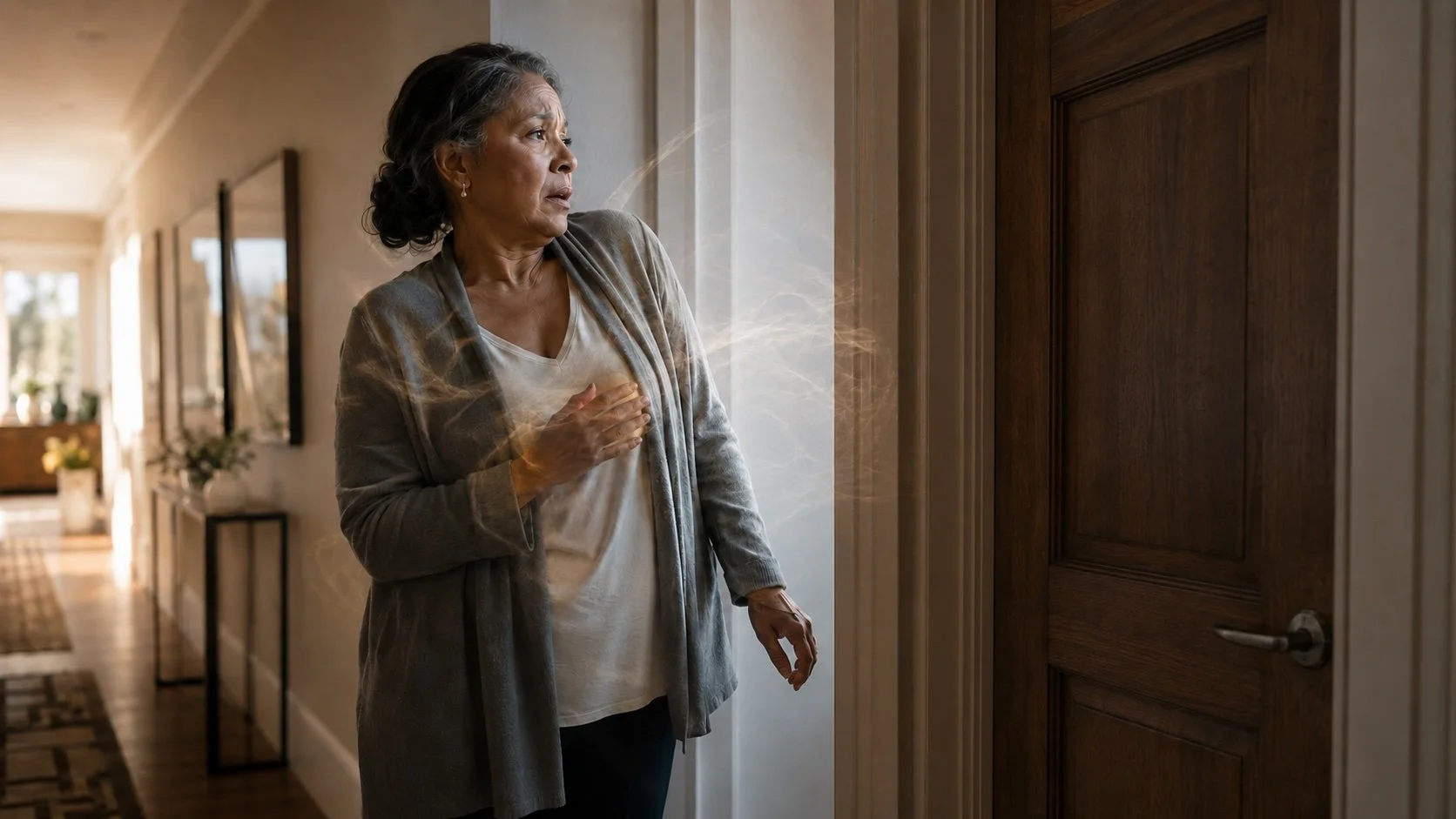
A door slams.
The sound lasts only a second. The physical movement is over almost as soon as it begins. Yet the moment itself may remain suspended in the room, in the body, and between two people long after the door has stopped moving.
One person stands on one side, perhaps shaking, furious, frightened, or suddenly numb. The other walks away, convinced that the interaction has ended. But has it?
At Life in Synergy®, we understand human interaction as more than the exchange of words and visible gestures. Every encounter also carries intention, emotion, attention, and energy. A door slammed in someone’s face is therefore not merely an object being closed. It can become a declaration without language: You are shut out. You do not matter. Your presence is unwanted. I refuse to meet you here.
The person closing the door may not consciously mean all of those things. They may simply be overwhelmed and desperate to escape an interaction. But human beings do not receive one another through intention alone. We also receive impact. The space between what one person intended and what the other person experienced is where many repeating patterns begin.
The body hears the slam
Before the conscious mind has time to explain the event, the body may respond. The shoulders tighten. The jaw locks. Breathing becomes shallow. The heart seems to strike harder against the chest. A person may freeze in place or immediately feel the urge to shout, cry, retaliate, or disappear.
This physical response does not prove weakness or overreaction. The body is responding to sudden sound, motion, conflict, and perceived rejection. It is attempting to determine whether the moment is over or whether something else is coming.
For the person who slammed the door, the body is also involved. Anger does not evaporate merely because a barrier has been placed between two people. The hand that pushed the door may still be tense. The breath may remain shortened. The mind may begin constructing a case for why the action was justified. Beneath that mental argument, however, the body can remain caught inside the unfinished encounter.
This is one reason dramatic exits rarely deliver the freedom they promise. They create distance, but distance is not necessarily resolution. The room changes; the inner state often does not.
The etheric echo of an unfinished moment
Within the spiritual framework of Life in Synergy®, we use the word etheric to describe a subtle energetic dimension of human experience. This is not presented as a medical measurement. It is a way of understanding the felt atmosphere carried by intention, emotion, and unresolved interaction.
Most people have experienced this dimension whether or not they use spiritual language for it. You enter a room after an argument and immediately sense that something happened. A person says, “I’m fine,” yet the space around them feels anything but fine. Someone leaves, but their anger appears to remain behind like heat in the air.
When a door is slammed in another person’s face, the etheric exchange can feel abrupt and violent because the relationship has been severed in motion but not completed in consciousness. The physical door closes; the energetic interaction remains open.
The rejected person may carry the moment forward as humiliation, abandonment, anger, or self-doubt. The person who slammed the door may carry it as righteousness, guilt, fear, or the temporary intoxication of control. Each person may leave with a different story, but both have been altered by the exchange.
If neither person becomes conscious of what happened, the energy seeks another place to go. It may appear later as coldness at dinner, impatience with a child, tension in the neck, sleepless mental rehearsals, or an argument about something apparently unrelated. Unprocessed energy is rarely loyal to its original location. It travels.
This does not mean every uncomfortable feeling is a mystical force, nor does it mean one difficult moment permanently damages an etheric field. It means that what we refuse to meet consciously can continue shaping perception, behavior, and the atmosphere of a relationship.
A boundary and a punishment are not the same thing
There are moments when closing a door is necessary. If an interaction is unsafe, abusive, threatening, or escalating beyond control, creating physical distance may be the wisest and most loving choice available. Spiritual responsibility never requires someone to remain accessible to harm.
But there is a profound difference between closing a door to establish safety and slamming it to inflict pain.
A conscious boundary says, “I cannot continue this interaction right now. I am stepping away.” A punitive gesture says, “I want you to feel my rejection.” Outwardly, the actions may look similar. Energetically, they are not.
The difference lives in intention, awareness, and what happens next. Does the person return when calm and take responsibility for their part? Do they explain the boundary? Do they acknowledge the impact? Or is silence used as a weapon, leaving the other person to wander inside uncertainty?
At Life in Synergy®, we teach that each person is 100% responsible for their 50% of an interaction. This does not mean accepting blame for another person’s behavior. It means refusing to abandon responsibility for the energy, choices, and patterns that belong to us. If you slammed the door, my responsibility is not erased because you were difficult. Consciousness begins when both people stop using the other person’s behavior as permission to remain unconscious.
The pattern beneath the hand
The door is rarely the whole story.
For one person, the slam may be an old pattern of power: When I feel vulnerable, I end the encounter before you can leave me. For another, it may be a pattern of emotional disappearance: When conflict awakens discomfort, I remove myself without explanation. For the person left outside, it may awaken an older wound: Once again, I am the one who is excluded, unheard, or abandoned.
These patterns can meet with extraordinary precision. One person fears being controlled and pushes away. The other fears abandonment and pursues. The pursuit intensifies the first person’s need to escape; the escape intensifies the second person’s need to pursue. Soon, neither is responding only to the present moment. Each is reacting from a history that has entered the room wearing today’s clothes.
This is why simply declaring who was right is often insufficient. Rightness may settle an argument, but it does not necessarily reveal the pattern. The deeper question is not only, “Who slammed the door?” It is, “What became activated in each of us before the door ever moved?”
Returning consciousness to the threshold
Healing does not require pretending the moment was harmless. It asks us to return to the threshold with greater awareness than we possessed when we left it.
Begin with the body. Before composing the perfect apology or defense, stop. Feel your feet. Release the jaw. Allow the exhalation to lengthen naturally. Notice whether the body is preparing to fight a battle that is no longer physically happening. A Return to One practice can help interrupt the momentum—not to suppress anger, but to prevent anger from becoming the only intelligence available.
Then name the act without decoration.
“I slammed the door in your face.”
Not, “I’m sorry, but you made me.” Not, “I only did it because you always...” The moment we attach an accusation to an apology, we quietly return responsibility to the other person.
The next step is to acknowledge impact without insisting that your intention be accepted as the final truth.
“I was overwhelmed and wanted the interaction to stop. I can see that the way I ended it may have felt rejecting and frightening.”
This language does not require self-condemnation. Shame often produces more hiding, more defensiveness, and another slammed door. Responsibility is different. Responsibility stands in the doorway and remains present.
If you were the person left on the other side, your work is equally sacred but different. You are allowed to name what happened. You are allowed to decide what behavior you will not accept. You are also invited to notice what the moment awakened within you. Did the event hurt only because of what happened today, or did it find an older doorway inside you—one that has been slammed many times before?
Recognizing an older wound does not excuse the present behavior. It prevents the present behavior from owning your entire history.
What we leave behind can be changed
No one moves through a lifetime without closing something too quickly. We have all withdrawn, reacted, protected, punished, or mistaken emotional force for personal power. Conscious living is not a performance of perfection. It is the willingness to become aware of the energy we create and to participate in its transformation.
The true aftereffect of a slammed door is not determined only by the slam. It is also determined by what follows.
Does pride guard the threshold? Does silence harden around the event? Do both people continue feeding the story until the moment becomes evidence for every injury they have ever known?
Or does someone become conscious enough to return—not necessarily to reopen the relationship, but to reopen integrity?
An apology can change the energy. A clearly spoken boundary can change it. An honest acknowledgment can change it. Sometimes the most powerful transformation occurs privately, when a person realizes, “I will no longer send my unresolved pain through doors, voices, bodies, or silence.”
That decision matters because energy does not end with the person directly in front of us. The aggression we do not examine can reach the next conversation. The rejection we do not heal can shape the next relationship. The tension held in the body can become the emotional weather of a home.
But consciousness travels too.
One person who stops, breathes, and refuses to pass the wound onward changes the field of what happens next. One person who becomes 100% responsible for their 50% creates a new possibility where repetition once seemed inevitable.
The door may already have slammed.
You cannot retrieve that second from time. But you can decide what energy will cross the next threshold.
If you are ready to understand the recurring patterns beneath your reactions and relationships, explore the Apex Life in Synergy® Program at LifeInSynergy.com. The work is not about becoming someone who never feels anger. It is about becoming conscious enough that anger no longer decides what you leave behind.
Life in Synergy®, founded by Helena Collins and Brian Collins, is dedicated to helping individuals understand recurring life patterns, cultivate inner peace, and develop higher levels of consciousness through multi-award-winning online educational programs. The Apex Life in Synergy® Program, Synergistics Fitness Method®, EFV Keys, and Helena Collins' bestselling Nutritional Alignment® integrate spiritual wellness, behavioral insight, subconscious awareness, and practical personal transformation into one comprehensive educational system. Discover more at https://www.lifeinsynergy.com.

Climate Change Will Never Be Fully Addressed Until Humanity Heals Its Spiritual Blind Spots
Climate change is more than an environmental challenge—it reflects the choices born from human consciousness. Discover how recurring human patterns, emotional responsibility, and inner transformation shape the future of our planet.

We are all mind energy, unlock your abilities with Life in Synergy®
If this question has ever quietly lived within you, perhaps this article found you for a reason.
By Helena Collins, Multi Award winning Creator of the Apex Life in Synergy® Program
Humanity has devoted extraordinary intelligence to understanding the planet.
We measure the atmosphere with remarkable precision, launch satellites into space, model future weather patterns, debate legislation, develop cleaner technologies, and invest enormous resources into finding solutions that will preserve the world for generations to come. Every one of these efforts has value. Every scientific breakthrough adds another piece to the puzzle. Yet beneath all of this remarkable innovation lies a question that is rarely asked.
Who is the human being making these decisions?
At Life in Synergy®, we have spent decades exploring recurring human patterns, and again and again we arrive at the same realization: every challenge humanity attempts to solve is filtered through the consciousness of the people attempting to solve it. Perhaps climate change is not only asking us to examine the atmosphere surrounding the Earth. Perhaps it is inviting us to examine the atmosphere within ourselves.
When most people think about environmental change, they naturally focus on physical causes and physical solutions. Those conversations are important. Yet every invention, every policy, every business decision, every act of conservation, and every act of destruction begins long before it reaches the physical world. It begins in the unseen landscape of human consciousness. Fear, greed, separation, insecurity, competition, resentment, and the endless pursuit of "more" are not simply emotional experiences. They are recurring patterns that quietly influence how we consume, how we govern, how we build economies, how we relate to one another, and ultimately how we relate to the living world itself. A forest is not destroyed by a chain saw. It is destroyed by a decision, and every decision begins as a movement within consciousness before it ever becomes an action in the physical world.
Throughout history humanity has repeatedly demonstrated an extraordinary ability to solve one problem while unintentionally creating another.
Technology advances faster than wisdom. Information expands faster than understanding. We become increasingly capable of transforming the world around us while remaining strangers to the unconscious forces that continue shaping our choices. The result is that we often address symptoms while leaving untouched the deeper patterns that continually recreate them. This is not unique to environmental issues. We see it in relationships, where unresolved emotional wounds quietly repeat themselves through different partners. We see it in politics, where cycles of blame and division continually regenerate themselves regardless of who holds power. We see it in business, where success without self-awareness often produces exhaustion instead of fulfillment. Why would humanity's relationship with the Earth be any different?
This is where spirituality enters the conversation—not as religion, ideology, or an escape from practical responsibility, but as the courageous willingness to become conscious of ourselves. Spiritual growth begins when we stop assuming the problem exists entirely outside of us and begin asking what unconscious patterns may still be operating within us. Every unresolved fear subtly influences perception. Every emotional wound that remains unconscious quietly shapes future choices. Every recurring pattern that escapes our awareness continues expressing itself through our behavior, our relationships, and eventually through the systems we collectively create. Until we learn to see these inner movements clearly, they continue directing our lives from behind the curtain.
Imagine a humanity that no longer makes decisions primarily from fear.
Imagine leaders who respond with clarity instead of reacting through division. Imagine businesses measuring success not only through profit but through responsibility. Imagine families teaching children that fulfillment cannot be purchased and that peace is not something to consume but something to cultivate. Imagine millions of people discovering that true abundance arises from consciousness rather than accumulation. Would our relationship with the Earth begin to change? At Life in Synergy®, we believe it would—not because spirituality replaces science, and not because consciousness replaces innovation, but because consciousness determines how knowledge, technology, and power are ultimately expressed.
Science can explain ecosystems with breathtaking accuracy. Engineers can create remarkable solutions. Governments can establish policies that encourage responsible stewardship. These are all essential. Yet only human consciousness can consistently choose wisdom over impulse, responsibility over blame, cooperation over division, and long-term care over immediate gratification. Until those inner qualities become more deeply rooted within humanity, our outer solutions will continually struggle against the same unconscious forces that helped create the problems in the first place.
Perhaps the climate crisis is also revealing a deeper crisis of consciousness.
Perhaps the Earth is not only asking humanity to restore forests, rivers, oceans, and skies. Perhaps it is quietly asking us to restore something within ourselves that has long been neglected. Every moment we dissolve fear instead of feeding it, every moment we choose awareness over reaction, every moment we become less divided within ourselves, we subtly influence the field from which every future decision will emerge. The outer world has always reflected the inner one. Healing one while neglecting the other may never be enough.
The future of the planet depends not only upon what humanity builds, invents, or legislates, but upon who humanity becomes. The climate surrounding the Earth matters profoundly. Yet the climate of the human heart may ultimately determine the choices that shape every generation to come.
Helena and Brian Life in Synergy® Boston
About Life in Synergy®
Helena Collins and Brian Collins are the founders of Life in Synergy® and creators of the multi-award-winning Apex Life in Synergy® Program. Their work explores recurring human patterns, consciousness development, emotional responsibility, and practical pathways toward lasting inner peace. Through Life in Synergy®, they teach that meaningful transformation begins within, where the unseen patterns of consciousness give rise to every choice, every relationship, and every future.

The Global Crisis of Inner Stability: Why So Many People No Longer Trust Their Own Emotional State
People across the world are experiencing unprecedented emotional instability—not simply because life is becoming harder, but because our internal patterns are struggling to adapt to a rapidly changing world. Explore why inner stability may be the defining human challenge of our time and how conscious awareness can help break recurring emotional cycles.

If this question has ever lived in your body, this article found you for a reason.
By Helena Collins
Creator of the Apex Life in Synergy® Program
There has never been more information available to humanity.
There has also never been so much internal uncertainty.
Across nearly every nation, people are asking different questions but arriving at the same emotional destination.
"Why don't I feel like myself anymore?"
The economy may be different.
Politics may be different.
Religions may be different.
Cultures may be different.
Yet beneath the surface, humanity appears to be experiencing one shared phenomenon.
People no longer trust themselves.
Not because they have become weaker.
Because they have become overwhelmed.
Every hour the human nervous system is asked to absorb thousands of emotional signals from social media, twenty-four-hour news cycles, artificial intelligence, economic uncertainty, wars, environmental concerns, relationship struggles, financial pressure, and the endless comparison that accompanies modern life.
The subconscious mind was never designed to carry the emotional weight of an entire planet.
Yet that is exactly what many people attempt every day.
Without realizing it, they become emotionally fused to events they cannot control.
The result is a profound loss of inner stability.
Life in Synergy® views this through a slightly different lens than many traditional approaches.
Most people believe their emotional state is a reliable measurement of reality.
It is not.
It is often a measurement of accumulated unconscious patterns responding to perceived reality.
There is a tremendous difference.
When fear arises, we assume danger must exist.
When sadness appears, we assume something is wrong.
When anxiety surfaces, we search desperately for external explanations.
Yet emotions frequently represent the activation of familiar subconscious programs far older than the present moment.
The body remembers patterns long after the mind forgets the original experiences that created them.
This explains why two people can watch the same news story, experience the same financial challenge, or enter the same relationship while reacting in completely opposite ways.
The external circumstance is identical.
The internal pattern is not.
Modern neuroscience continues to demonstrate that the brain naturally favors familiar neural pathways, even when those pathways generate unnecessary suffering.
Behavioral psychology has repeatedly shown that learned emotional responses become automatic over time.
Stress physiology demonstrates that chronic activation reshapes perception itself.
Across many contemplative traditions, similar observations have existed for thousands of years using different language.
Each discipline is pointing toward a remarkably similar truth.
What we repeatedly experience internally eventually becomes the reality we unconsciously expect.
When enough people lose trust in their own emotional stability, entire societies begin making decisions from reaction rather than awareness.
We become easier to manipulate.
More polarized.
More defensive.
More exhausted.
More desperate for certainty.
Ironically, the more desperately we search outside ourselves for emotional security, the further we drift from discovering it.
This is why the current global crisis is not merely political.
It is not merely economic.
It is not merely technological.
It is fundamentally a crisis of consciousness.
A crisis of relationship.
Not simply with each other.
But with ourselves.
At Life in Synergy®, we believe genuine stability is not created by controlling the external world.
It is created by understanding the patterns that continuously shape our internal one.
Inner stability is not emotional numbness.
It is not pretending to remain positive.
It is not avoiding difficult conversations.
It is the growing ability to witness emotion without immediately becoming it.
To experience fear without surrendering autonomy.
To experience uncertainty without abandoning peace.
To recognize that awareness always exists before reaction.
Every moment offers humanity an invitation.
Will we continue outsourcing our emotional state to whatever appears on a screen today?
Or will we begin reclaiming authorship of our own consciousness?
This question may become one of the defining challenges of our generation.
Because civilizations are ultimately built from individuals.
Families are built from individuals.
Communities are built from individuals.
If individuals cannot trust the stability of their own awareness, collective instability naturally follows.
Perhaps the greatest act of courage in today's world is no longer changing the world first.
Perhaps it is becoming internally trustworthy.
When your own mind becomes a place of clarity rather than conflict...
When your emotions become information instead of identity...
When your awareness becomes stronger than your unconscious patterns...
You no longer wait for the world to become peaceful before finding peace,
You become one of the people helping create it.
At Life in Synergy®, we believe this is where authentic transformation begins—not by escaping uncertainty, but by developing a consciousness capable of remaining steady within it. That journey forms the foundation of the multi-award-winning Apex Life in Synergy® Program, where recurring human patterns, personal responsibility, and conscious awareness are explored as practical pathways toward lasting inner peace.

The Smoke Has a Source
We see the smoke, feel the heat and mourn what has been lost—but rarely look deeply enough for the source. Wildfires reveal a larger truth about our lives: visible destruction often begins with something hidden, neglected or allowed to grow unchecked.

Over the past several weeks, millions of people have looked outside to find hazy skies, poor air quality, and the unmistakable smell of smoke from the Canadian wildfires.
What's striking is that many of those experiencing the smoke are nowhere near the flames. The fires may be burning hundreds or even thousands of miles away, yet the effects have traveled far beyond their point of origin. The smoke has become a powerful reminder that just because we can't see where something started doesn't mean we aren't living with its consequences.
I couldn't help but think about how similar this is to unresolved energy within us.
Every emotion, every wound, every fear, and every painful experience has an origin. Nothing simply appears overnight. There is always a moment—a conversation, a betrayal, a loss, a disappointment, a season of neglect—that first ignites the fire. Yet instead of acknowledging where it began, many of us become experts at managing the smoke. We adapt to it. We normalize it. We convince ourselves that because we can function, the fire must no longer exist.
But fires don't disappear simply because we stop looking at them.
In nature, a wildfire spreads by finding more fuel. Dry grass becomes burning brush. Brush becomes trees. Trees become entire forests. What began as a single spark can eventually consume thousands of acres because every new patch of fuel allows the fire to grow stronger. Unresolved emotional energy works in much the same way. One painful experience attaches itself to the next. A childhood rejection makes an adult criticism feel unbearable. One betrayal makes it difficult to trust the next relationship. One season of burnout makes every new responsibility feel overwhelming. Without realizing it, we keep adding fuel to a fire that was never extinguished.
Eventually, it becomes difficult to separate today's reaction from yesterday's wound. We believe we're responding to the present moment, when in reality we're reacting to years of accumulated pain. The original spark becomes almost impossible to identify because the fire has spread so far beyond where it first began.
Then comes the smoke.
Just as wildfire smoke drifts across borders and settles over communities that never saw the flames, unresolved energy has a way of spreading beyond ourselves. It changes the atmosphere of our relationships. It shows up in our communication, our patience, our ability to trust, and our capacity to be fully present. It can influence our parenting, our leadership, our friendships, and even the way we speak to ourselves. The people around us may never know where the fire started, but they often experience the smoke.
Perhaps that's why healing is so important. Healing isn't about pretending the fire never happened or wishing difficult experiences away. It isn't about masking the smell of smoke while hoping no one notices. Real healing begins by tracing the smoke back to its source. It requires the courage to ask difficult questions, revisit painful moments with honesty, and acknowledge the places where we have been carrying unresolved pain. Only when the source is addressed can the fire begin to lose its power.
The beauty of healing is that it doesn't just benefit the person doing the work. As the fire is contained, the smoke begins to clear. The atmosphere changes. Relationships become healthier. Conversations become gentler. Peace replaces tension. The people around us no longer have to breathe in what was never theirs to carry.
The Canadian wildfire smoke is a reminder that every visible effect has an invisible origin. The haze covering the sky points back to a fire somewhere else. In the same way, the heaviness we sometimes carry—or unintentionally spread—often points back to something deeper that still needs our attention. We can spend our lives adjusting to the smoke, or we can have the courage to find the source.
Because every fire has an origin.
And every healed fire creates room for clearer skies.
-Helena Collins-Boston

How Do We Create Meaning When the Old Stories No Longer Hold the Same Power?
Many people feel that the beliefs, traditions, and stories that once guided humanity no longer provide the same sense of purpose. Explore how creating meaning through conscious awareness, responsibility, and recurring human pattern recognition can transform uncertainty into growth.

If this question has ever lived in your body, this article found you for a reason.
By Helena and Brian Collins
Across Europe, a quiet question is beginning to emerge beneath conversations about politics, economics, technology, social change, mental health, and the future.
It is not being asked in parliament.
It is not being debated in universities.
It is not being solved by artificial intelligence.
It is being asked silently in homes, cafés, train stations, offices, and long walks through ancient cities.
How do we create meaning when the old stories no longer hold the same power?
For centuries, meaning was often inherited.
It came from family traditions.
Religious institutions.
Cultural expectations.
Community roles.
National identities.
People did not always agree with these structures, but they provided something profoundly important:
A framework through which life could be understood.
Today, many Europeans find themselves living in a different reality.
The old frameworks have weakened.
Traditional institutions no longer carry the same influence they once did.
Trust in systems has declined.
Technology has connected humanity while simultaneously creating new forms of isolation.
Information has become abundant, yet wisdom often feels scarce.
As a result, many individuals find themselves experiencing a subtle but persistent feeling that something is missing.
Not because they lack intelligence.
Not because they lack success.
Not because they lack opportunity.
But because human beings do not simply seek information.
They seek meaning.
And meaning cannot be downloaded.
It cannot be purchased.
It cannot be outsourced.
It must be discovered.
The challenge facing modern Europe is not a crisis of information.
It is a crisis of interpretation.
Never before has humanity possessed so much knowledge while simultaneously questioning so many fundamental aspects of existence.
Who am I?
Why am I here?
What is my purpose?
What truly matters?
What patterns am I repeating?
What am I becoming?
These are not philosophical luxuries.
These are human necessities.
Without meaning, achievement feels hollow.
Without purpose, progress feels empty.
Without understanding, even success can feel strangely unsatisfying.
This is where many people become trapped.
When old stories lose their power, the instinct is often to immediately replace them with new stories.
New ideologies.
New trends.
New identities.
New systems.
New labels.
Yet replacing one unconscious framework with another rarely creates freedom.
It simply changes the scenery.
True transformation begins somewhere deeper.
It begins with observation.
At Life in Synergy®, this principle has guided our work for decades.
As a two-time Best of Boston award winner, best-selling author, creator of the Synergistics Fitness Method®, and founder of the Apex Life in Synergy Program®, Brian and I have spent much of our lives helping individuals understand that the answers they seek often cannot be found by collecting more information.
They are found by developing a deeper relationship with themselves.
This is perhaps one of the reasons European audiences may find themselves increasingly open to approaches like those offered through Life in Synergy.
Europe has a rich history of philosophy, inquiry, exploration, and intellectual curiosity. From the ancient Greeks to the Renaissance thinkers to modern psychology, European culture has long embraced the idea that growth requires questioning assumptions.
Questioning assumptions is not rebellion.
It is evolution.
The willingness to examine inherited beliefs, recurring patterns, and unconscious behaviors is one of the most powerful catalysts for personal transformation.
Many individuals spend years attempting to solve external problems while remaining unaware of the internal patterns that continue recreating them.
The same relationships.
The same frustrations.
The same fears.
The same limitations.
The same emotional reactions.
The same feeling of being stuck despite changing circumstances.
When this happens, the issue is rarely the environment.
The issue is often the pattern.
The Apex Life in Synergy Program® was created to help individuals identify and understand these recurring patterns. Not through dogma. Not through blind belief. Not through asking people to abandon their traditions or values.
But through observation.
Awareness.
Conscious participation in their own growth.
Because the question facing Europe today is not merely:
"What should we believe now?"
The deeper question is:
"How do we become conscious participants in our own lives?"
Meaning does not emerge from certainty.
Meaning emerges from engagement.
From curiosity.
From growth.
From understanding.
From recognizing that life is not a static event but an ongoing relationship between ourselves and the world around us.
The old stories may indeed be losing some of their power.
But perhaps that is not a tragedy.
Perhaps it is an invitation.
An invitation to move beyond inherited assumptions and toward conscious awareness.
An invitation to discover that meaning is not something handed to us by a system.
It is something cultivated through participation in our own evolution.
At Life in Synergy, we believe humanity's next great frontier is not technological.
It is internal.
The future will not be shaped solely by what we build.
It will be shaped by who we become.
And for those willing to ask deeper questions, that journey may already have begun.
-Helena Collins
Life in Synergy®
Life in Synergy is a multi-award-winning online spiritual wellness and personal transformation organization founded by Helena Collins and Brian Collins. Helena Collins is a two-time Best of Boston award winner, best-selling author of Nutritional Alignment®, creator of the Synergistics Fitness Method®, and founder of the Apex Life in Synergy Program®. Brian Collins is the creator of the EFV Keys (Energetic Frequency Vibrations) System and has spent decades helping individuals identify recurring patterns affecting personal growth, relationships, purpose, and inner peace.
Together, they have guided thousands of individuals through transformative processes designed to uncover subconscious influences, improve self-awareness, cultivate personal responsibility, and foster greater consciousness development.
If recurring patterns, uncertainty, inner conflict, or a search for deeper meaning continue appearing in your life, explore the award-winning programs and resources available at www.lifeinsynergy.com.

Why Do I Keep Becoming the Same Person? The Hidden Pattern Behind Human Consciousness
Why do the same emotional patterns keep repeating in life? Discover how unconscious conditioning shapes human consciousness and learn how Helena Collins Apex Life in Synergy® Program helps transform recurring patterns into lasting inner peace, personal growth, and authentic happiness.

If this question has ever lived in your body, this article found you for a reason.
By Helena Collins, Creator of the Apex Life in Synergy® Program
There comes a quiet moment in nearly every person's life when a question begins whispering beneath the noise of everyday existence.
"Why does this keep happening to me?"
The faces may change. The careers may change. Relationships begin and end. Financial circumstances rise and fall. Health improves, then falters. We move to different cities, meet different people, pursue different dreams. From the outside, life appears to be constantly changing.
Yet beneath the surface, many people eventually notice something unsettling.
The emotional destination feels strangely familiar.
Different scenery.
The same internal experience.
Most people accept this as simply "how life works." At Life in Synergy®, after decades of working with thousands of individuals, we have come to explore a very different possibility.
What if these recurring experiences are not random at all?
What if they are expressions of unconscious patterns patiently waiting for us to finally recognize them?
This single question sits at the intersection of psychology, neuroscience, behavioral science, human performance, contemplative traditions, and spiritual development. While each discipline uses different language, they often point toward remarkably similar observations.
Modern neuroscience tells us that the brain strengthens the neural pathways we use most frequently. Behavioral psychology demonstrates that people naturally repeat familiar emotional responses. Research into stress physiology shows that unresolved experiences continue shaping how we perceive new situations, often without conscious awareness. Spiritual traditions throughout history have described similar phenomena through concepts such as karma, conditioning, energetic imprinting, subconscious programming, and the evolution of consciousness.
Different words.
Remarkably similar truths.
The Apex Life in Synergy® Program was created to bring these perspectives together into one practical framework that helps people recognize recurring life patterns before they quietly become tomorrow's reality.
Perhaps the greatest prison humanity has ever constructed has no walls at all.
It is the quiet belief that who you have always been is who you must continue becoming.
Every thought strengthens something.
Every emotional reaction feeds something.
Every repeated interpretation reinforces something.
Every moment of attention waters a particular part of your inner landscape.
The real question is not simply what happened today.
The real question is:
What are you strengthening today?
One of the most hopeful discoveries of modern science is neuroplasticity—the understanding that the brain continues changing throughout our lives. Human beings are not fixed. Emotional resilience can be cultivated. Habits can transform. Relationships can heal. Perspectives evolve. Entire lives can move in new directions.
But lasting change rarely begins with external circumstances.
It almost always begins with awareness.
At Life in Synergy®, our work has never centered on teaching people to pretend painful emotions do not exist or to replace reality with positive thinking. Instead, we help individuals become curious about why certain emotional experiences keep returning. Why does peace sometimes feel uncomfortable? Why does confidence seem unfamiliar? Why can love itself feel frightening?
The answer is often simpler than we imagine.
Conflict becomes familiar.
Self-doubt becomes practiced.
Disappointment becomes emotionally rehearsed.
Eventually, familiarity disguises itself as identity.
This is not evidence that someone is broken.
It is evidence that awareness is asking to grow.
For decades, Helena Collins and Brian Collins have dedicated their lives to helping individuals pursue genuine transformation rather than temporary motivation. Their work integrates physical wellbeing, emotional intelligence, subconscious awareness, behavioral understanding, and spiritual development into one unified educational philosophy.
Helena Collins is a two-time Best of Boston award winner, bestselling author of Nutritional Alignment®, creator of the Synergistics Fitness Method®, and founder of the Apex Life in Synergy® Program. Brian Collins developed the EFV Keys (Energetic Frequency Vibration) framework through decades of martial arts training, metaphysical study, chi gong study, healing practices, and intense observation of recurring human behavioral patterns.
Together, their work is founded upon a simple yet profound belief.
Lasting transformation does not begin by becoming someone new.
It begins by remembering the peaceful nature that has quietly existed beneath accumulated conditioning all along.
As humanity continues searching for more effective approaches to wellness, the future is unlikely to belong exclusively to medicine, psychology, or spirituality.
It will belong to those willing to understand the relationship between body, mind, emotion, behavior, subconscious conditioning, and consciousness as parts of one living system rather than separate disciplines competing for attention.
That understanding is the very heart of a Life in Synergy.
If you have spent years asking why your life seems to repeat the same emotional chapters despite changing circumstances, perhaps the question itself is ready to evolve.
Instead of asking,
"Why does this keep happening to me?"
Consider asking,
"What is this pattern trying to teach me before it repeats once more?"
Sometimes the greatest breakthrough is not discovering something new.
Sometimes it is finally seeing what has quietly been waiting within you all along.
Life in Synergy®, founded by Helena Collins and Brian Collins, is dedicated to helping individuals understand recurring life patterns, cultivate inner peace, and develop higher levels of consciousness through multi-award-winning online educational programs. The Apex Life in Synergy® Program, Synergistics Fitness Method®, EFV Keys, and Helena Collins' bestselling Nutritional Alignment® integrate spiritual wellness, behavioral insight, subconscious awareness, and practical personal transformation into one comprehensive educational system. Discover more at https://www.lifeinsynergy.com.

Understanding vs. Knowledge
Many people pursue knowledge but never achieve understanding. Discover how deeper awareness reveals recurring patterns, expands consciousness, and transforms your life through the principles of the Apex Life in Synergy Program®.

If this question has ever lived in your body, this article found you for a reason.
By Helena Collins
Humanity has become obsessed with knowledge.
We celebrate the accumulation of information. We reward credentials, memorization, expertise, and the ability to quickly provide answers. Entire industries have been built around convincing people that the next book, course, certification, or technique will finally provide the missing piece they have been searching for.
Yet despite having access to more information than any generation in history, many people remain trapped in the same repeating cycles of frustration, anxiety, self-doubt, unhealthy relationships, financial struggles, and internal conflict.
Why?
Because knowledge and understanding are not the same thing.
Understanding is an expansion of consciousness. Knowledge is often the assumption that consciousness has arrived.
One remains open.
The other frequently closes the door.
Understanding begins with the acknowledgment that there is always more to discover. It is the recognition that every answer reveals another question and every layer of awareness uncovers deeper dimensions hidden beneath the surface. It is not a destination. It is a relationship with life itself.
Consider something as simple as walking.
Most people know how to walk. They have been doing it for decades. Yet very few people truly understand the patterns being expressed every time they take a step.
Do you favor one side of your body?
Does one foot turn outward more than the other?
Do you lead with confidence or caution?
Do you move quickly through life or hesitate before every step?
Do you carry tension in your shoulders?
Do you hold your breath when stressed?
Now look deeper.
Do your parents move in similar ways?
Do they carry the same physical tendencies?
The same emotional tendencies?
The same fears?
The same relationship patterns?
The same struggles?
At what point does observing a simple gait become the study of consciousness itself?
What appears to be a physical habit may actually reveal inherited patterns expressing themselves through the body. A posture becomes a story. A movement becomes a message. A tendency becomes a blueprint.
The deeper understanding is not found in the act itself.
It is found in what the act reveals.
This principle applies equally to mathematics, science, spirituality, relationships, fitness, business, and every area of human experience. The moment we label one form of understanding as more important than another, we have entered judgment. The observation of your own walk can reveal as much about your existence as years spent studying a textbook if you are willing to look deeply enough.
Everything becomes a teacher when awareness is present.
Knowledge, however, often attempts to place a finish line where none exists.
Knowledge says:
"I know."
Understanding says:
"I am learning."
Knowledge seeks ownership.
Understanding seeks relationship.
Knowledge attempts to define reality.
Understanding recognizes that reality continuously expands beyond definition.
Can any human truly claim complete knowledge of anything?
Do we fully understand consciousness?
Do we fully understand love?
Do we fully understand the human body?
Do we fully understand time?
Do we fully understand the universe?
Every discovery humanity makes opens the door to ten new mysteries. Every answer reveals another layer waiting to be explored.
Yet life continues regardless of our ability to explain it.
The stars move.
The oceans rise and fall.
The heart beats.
The tree grows.
Existence unfolds.
Not because we know.
But because it is.
This is why certainty can become one of the greatest obstacles to growth.
The moment we believe we fully understand something, we stop observing it.
We stop listening.
We stop questioning.
We stop evolving.
The pattern often disguised as knowledge is frequently ego.
Ego seeks ownership over reality. It wants certainty. It wants control. It wants to conquer what can never truly be conquered.
Understanding requires something much more powerful.
Humility.
The humility to recognize that no matter how much we learn, we are still touching only a tiny fraction of an infinite whole.
The humility to understand that wisdom is not measured by how much information we collect.
It is measured by how deeply we are willing to observe.
At Life in Synergy, this principle forms the foundation of transformation.
Many individuals arrive seeking answers to their problems. They want certainty. They want solutions. They want someone to tell them exactly what to do.
What they often discover instead is something far more valuable.
They discover how to observe.
The Apex Life in Synergy Program® was never created to simply provide more information. It was designed to help individuals recognize the hidden patterns operating beneath the surface of their lives. The repeating emotional loops. The inherited tendencies. The recurring life experiences. The subconscious programs that continue expressing themselves until they are understood.
Because transformation does not occur when knowledge is added.
Transformation occurs when understanding deepens.
The moment you stop trying to own reality and begin relating to it, everything changes.
The world becomes less about certainty and more about discovery.
Less about control and more about awareness.
Less about knowing and more about becoming.
And perhaps that is the greatest understanding of all.
PS: This blog is an except of an actual Apex Life in Synergy Module
The work of understanding recurring life patterns has been at the heart of Life in Synergy for decades.
Through the combined work of Helena Collins, creator of the Apex Life in Synergy Program® and the award-winning Synergistics Fitness Method®, and Brian Collins, creator of the EFV Keys (Energetic Frequency Vibrations) System, thousands of individuals have been guided toward greater self-awareness, personal transformation, inner peace, and consciousness development.
Life in Synergy's multi-award-winning online spiritual wellness and personal transformation programs are designed to help individuals identify recurring patterns, uncover subconscious influences, strengthen self-understanding, and create lasting positive change through greater awareness and alignment.
Explore the Apex Life in Synergy Program®, Synergistics Fitness Method®, and additional transformational resources at www.lifeinsynergy.com.